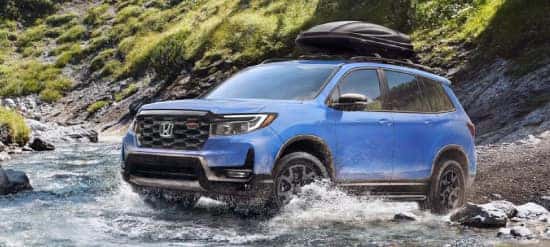
2024 Honda Passport: A Comprehensive Guide On Features, Specs, And Pricing
The 2024 Honda Passport offers a well-equipped base model, with plenty of visual and equipment upgrades that make it a competitive midsize crossover.
The second-generation Honda Passport carries on mostly unchanged for the 2024 model year. Enhanced storage, new color options, and other visual and minor equipment upgrades have been made to the Passport for this year. Performance, efficiency, off-road performance, towing, interior features, safety, and reliability all remain competitive for the Passport's class and price point.
Honda has creatively designed the Passport to maximize functionality both on-road and off-road. Even with all-wheel drive standard on all trims, the Passport TrailSport trim upgrades the suspension and tires for even greater off-road capability. The base trim offers plenty of standard features, and the Black Edition adds a plethora of visual and interior upgrades that make the Passport's already functional and spacious package even better.
To read the full article, click HERE. |
Car maintenance tips for summer: 12 tips to beat the heat
1. Test the AC
Summer heat pairs well with air conditioning. When higher temperatures hit, you’ll want a working AC system in your car. You may not have used your AC during winter or spring, so make sure you test it ahead of the summer season. If you’re getting hot air when you turn your air conditioning on, a simple fix may be a refrigerant (Freon) charge. Adding refrigerant to your car can give your AC system a boost. If that doesn’t do the trick, a car mechanic should be able to diagnose and treat the problem.
2. Check your tires’ air pressure
Winter conditions may have done damage to your tires. So, before going on long road trips this summer, make sure you inspect your tire pressure. When checking your tire pressure, you’ll want to look for signs that your tires are under- or overinflated. Most passenger cars have a recommended tire pressure between 30 and 35 PSI (pounds per square inch). When in doubt reference your car owner’s manual to learn the specifics on what your tire pressure range should be. Optimal tire pressure can prevent a flat tire or tire blowout. Ensuring your tires are properly inflated can also help maximize your gas mileage on those long car rides.
While you’re at it, it’s also a good idea to check the air pressure of your spare tire to make sure it will serve as a reliable alternative in case of an emergency.
3. Top off engine fluids
Seasonal weather shifts can often lead to low engine fluids as they tend to thin or even evaporate in warm temperatures. When summer comes around, you’ll want to top off your transmission fluid, power steering fluid, coolant and windshield wiper fluid.
Coolant fluid is particularly important to check during the summer months, as its job is to keep your car’s engine from overheating. Follow these steps to check your car’s coolant level:
- Open the hood
- Locate the coolant reservoir and undo the cap
- Check the coolant level shown by indicator lines on the reservoir
- If the indicator lines reveal that the coolant is too low, add the appropriate amount of coolant to the reservoir
- Reattach the cap
If you’re not comfortable checking the coolant levels, or any other engine fluids, your nearest mechanic can help you top everything off.
4. Get your oil & filter changed
Getting your oil and filter changed is one of the simplest ways to increase the longevity of your vehicle. Oil lubricants keep your engine safe from wear and tear, and the oil filter helps remove contaminants from your car’s engine oil. Changing your oil is simple. However, if this service is not done routinely, your car can develop costly oil problems, like particle buildup that could wear down vital parts of your engine. A good rule of thumb is to change your oil every 5,000 miles or follow your car manufacturer’s oil maintenance guidelines.
5. Test your brakes
Coming off of the harsh winter weather, it’s important to monitor your car’s brake performance. You rely on your brakes every time you drive, so it’s a good idea to do regular brake tests not only in the summer months, but year-round. Other than the obvious red flag of poor stopping performance, you’ll want to listen for squealing or growling sounds when testing your brakes. You’ll also want to check for brake pulling, or if your vehicle pulls to one side when you press the brake pedal. If you notice any of these poor performance signs, it’s time for an inspection and potentially a repair.
6. Replace windshield wipers
Maintaining visibility is an essential requirement while you’re behind the wheel. In summer, dust and pollen particles or even the sun’s glare can impair your ability to clearly see out of your windshield. Make sure to check your windshield wipers’ effectiveness to remove anything that could minimize visibility. It’s a good idea to check or replace your windshield wipers at the end of each season. Additionally, make sure pollen and other particles aren’t covering your light beams. If your headlights seem dim or weak, immediately change them to ensure you’re able to see clearly at night, in the rain or in any other conditions that may impact your sight from the driver’s seat.
7. Routinely clean or replace air filters
Your car’s air filters have a very important role, especially in the summer. They keep pollutants from coming in through the vents — which is critical during warmer months or seasons with high pollen counts. Not to mention, using an old filter can lead to problems with your air conditioning system. Replacing your full AC unit can cost anywhere from $1,000 to $4,000, so routinely maintaining your air filter’s quality is both important and cost-effective. It’s best to change your air filter every 12 months or 12,000 miles, or according to your manufacturer’s recommendations.
8. Clean your car
Keeping both the exterior and interior of your car clean doesn’t just make you feel good; it makes financial sense long-term. Hot temperatures can melt plastics, food or other rubbish left inside your car and could damage your car’s interior — which could require a costly repair.
Additionally, keeping your exterior clean can protect the paintwork from the sun’s rays, as well as damage caused by any birds or insects.
9. Rotate tires
You can extend the longevity of your tires simply by rotating them regularly. That’s because not all four tires on your vehicle will experience the same rate of wear and tear. Rotating them will help even out any wear they may experience, by allowing all four tires to work in each position of the car. Experts recommend rotating your tires every 3,000 to 5,000 miles.
10. Park your car in the shade
On hot days, try to park your car in the shade whenever possible. Parking your car in a shaded spot not only keeps you cool, but can keep your car cool and prolong its life. The sun’s rays could damage the exterior and paint of your car which could be costly to fix. Extreme heat could also heat up the interior of your car, like the steering wheel and leather seats, making it difficult to drive.
Having window shades in your car is a good idea in case you are unable to park your car in the shade. These shades will block out UV heat, keep the interior of your car from getting hot, and protect from any other damaging effects of the sun.
11. Keep your engine cool
Every car has a cooling system with the job of removing heat from the engine to maintain proper temperatures. The cooling system is made up of coolant, hoses, a thermostat, radiator and water pump.
The temperature gauge, designed to measure the coolant levels in your car, will indicate if your engine’s coolant is cold, normal or overheating. If the temperature gauge is indicating high levels, this could mean your vehicle is overheating. If this happens, pull over and wait for your engine to cool down. As this is a serious problem, it’s best to contact your local mechanic right away to fix the problem.
12. Stay hydrated
Just like your car, you need to top yourself off with fluids to operate properly. Dehydration and heat exhaustion can impact your ability to drive. Summertime also brings on more road traffic, pedestrians and bikers, so staying hydrated can keep you alert and avoid an accident.
When driving or traveling in high temperatures, make sure you and your passengers are properly hydrated. If possible, leave a few water bottles in a cool spot in your car so that you’ll always have water nearby.
To read the full article, click HERE.
|