50 Years of Honda Civic Sketches Show How
Car Design Has Evolved
July marked the 50th birthday of the Honda Civic. The car that's become one of the world's most popular first launched in Japan in July 1972, and since then, Honda has sold more than 30 million Civics globally across 11 (eleven!) generations. To celebrate, Honda released these killer sketch panels, illustrating the designs that carried the Civic from a plucky economy car to the automotive staple it is today.
It’s difficult to overstate just how impactful the Honda Civic has been to the American car industry, specifically over the past 50 years. Despite its low price tag, it's always been well-built, reliable, good-looking, and—most importantly—fun to drive. It's been part of Car and Driver’s 10Best eight times, it was a Motor Trend Car of the Year, and it has won North American Car of the Year three times, including in 2022.
READ MORE

|
You’ve probably heard the term “catalytic converter” recently. Unfortunately, it’s likely for all the wrong reasons.
Theft of this important car part has skyrocketed in the last few years. In 2018, roughly 1,300 catalytic converters were reported stolen across the country, according to the National Insurance Crime Bureau. That number rose to 3,389 in 2019 before catapulting to 14,433 in 2020.
It’s all part of a larger crime wave that saw 810,400 vehicles stolen in the United States in 2020, according to the Insurance Information Institute. That number was a nearly 12% increase from 2019 and the highest annual total since 2008. The NICB cites the pandemic, economic downturn, loss of youth-outreach programs, and public-safety budgetary and resource limitations as contributors to the upswing in auto-related thievery.
We know the motivation behind stealing valuable cars, but why the specific interest in catalytic converters?
What Is a Catalytic Converter?
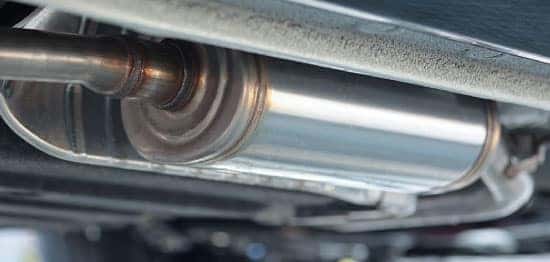
A catalytic converter is an important feature of your car’s exhaust system. Its purpose is to limit the number of harmful pollutants emitted by an internal combustion engine. Located between the vehicle’s engine and tailpipe, these devices convert toxic gases found in car emissions, such as carbon monoxide and nitrogen oxides, into less-harmful substances like carbon dioxide and water vapor.
Catalytic converters are filled with precious metals, which act as catalysts. Most often, these include palladium, rhodium, and platinum. When the engine emissions’ harmful gases pass through the device, they contact these metals and undergo a chemical reaction. This process alters their molecular structure, converting them into safer substances.
Why Are Catalytic Converters Stolen?
The reason these catalytic converters are stolen so often lies in what’s inside them. There is both high demand and limited supply of the precious metals contained in these devices. Recent disruptions in supply chains have made them even more difficult to source and, in turn, even more expensive.
This has turned catalytic converters, which can be removed from cars in a matter of minutes with readily available tools, into valuable commodities. Today, catalytic converters are worth more than gold – literally. Platinum is currently priced at about $1,000 per ounce, palladium is more than twice that, while rhodium is worth roughly $18,000. (Gold costs about $2,000 per ounce).
Catalytic converters typically have just a few combined grams of these metals. That would still fetch a price of at least a few hundred dollars, possibly up to $1,000.
Article credit: westerncentralny.aaa.com |
With gas prices creeping to new highs not seen in years, thieves looking to steal gas may begin targeting unsuspecting drivers. For a long time, siphoning was a popular method used to remove gas from a vehicle’s tank.
But, newer vehicles have an anti-rollover valve between the fuel tank and filler neck. This valve prevents gas from spilling out in the event the vehicle is involved in a rollover crash to lessen the chance of fire. It also makes it more difficult to siphon gas from the fuel tank and so thieves have begun to drill directly into the fuel tank to steal gasoline.
It was reported in April that gas theft rings have stolen over $140,000 in gas within recent weeks. As gas prices continue to rise, the threat of gas theft rises as well.
AAA suggests drivers take the following measures to protect themselves and their vehicles:
- Park in the garage at your home if you have one
- When out in public, park in a well-lit area with high traffic. If possible, park in a secure location like a fenced-in lot or parking garage.
- When parking in a garage, find a spot near the exit or elevator as those have the most visibility and foot traffic .
A driver who suspects they’ve been a victim of fuel theft should look for the following signs:
- The smell of gas as you approach your vehicle
- Puddle underneath your vehicle near the location of the fuel tank
- The vehicle does not start
- The vehicle starts but the fuel gauge shows lower than it was when you last drove and/or the check engine light (yellow) is illuminated
Once a driver confirms their vehicle has been tampered with, you should:
- Contact the police to file a report
- Reach out to your insurance agent to see if your policy covers related repairs
- Take your vehicle to a trusted repair facility as soon as possible
- Fuel tank repairs can cost as much as $1,000 to replace
Article credit: westerncentralny.aaa.com |
| Orzo with Caramelized Butternut Squash and Bacon
|
Ingredients
1-1/2 cups uncooked orzo pasta
4 bacon strips, chopped
2 cups cubed peeled butternut squash (1/2-inch cubes)
1/2 cup chopped onion
1 cup cut fresh or frozen cut green beans, thawed
1 garlic clove, minced
1 tablespoon butter
1 teaspoon garlic salt
1/4 teaspoon pepper
1/4 cup grated Parmesan cheese
Minced fresh parsley |
Directions
1. In a large saucepan, cook orzo according to package directions.
2. Meanwhile, in a large skillet, cook bacon over medium heat until crisp, stirring occasionally. Remove with a slotted spoon; drain on paper towels. Cook and stir squash and onion in bacon drippings until tender, 8-10 minutes. Add beans and garlic; cook 1 minute longer.
3. Drain orzo; stir into squash mixture. Add butter, garlic salt, pepper and reserved bacon; heat through. Sprinkle with Parmesan and parsley. |
| Receipe credit: tasetofhome.com |
|